Koh Samui is an easy island to enjoy and an easy one to get slightly wrong — by choosing the wrong beach, coming in the wrong month or renting a scooter you are not licensed to ride. This guide covers the practical side of a Samui holiday in one place.
Samui in brief
Samui lies in the Gulf of Thailand, about 35 km off the mainland of Surat Thani province, and at roughly 230 square kilometres is the country’s second-largest island after Phuket. For most of its history it was an isolated community of fishermen and coconut farmers, many descended from Hainanese Chinese and Malay settlers. Backpackers began arriving on coconut boats in the 1970s, the airport opened in 1989, and tourism has shaped the island ever since — though coconuts are still grown everywhere.
The interior is steep, forested granite; nearly everything of interest to visitors sits on or near the coastal ring road, Route 4169, a loop of about 50 km. The east coast (Chaweng, Lamai) is the busiest; the north (Bophut, Maenam, Bang Rak) is calmer and looks across to Koh Phangan; the west and south are rural and quiet. Choosing between them is the most important decision of your trip — see where to stay.
Getting around
Samui has no public buses in the usual sense, and distances are longer than the map suggests: Chaweng to Nathon takes a good 45 minutes.
| Transport | How it works | Good to know |
|---|---|---|
| Songthaew | Covered pickup trucks with two benches that run along the ring road by day. Flag one down, ring the buzzer to stop and pay the driver when you get off. | Cheapest option. Fares depend on distance; confirm the price if you are going far. After dark they work as private taxis at taxi prices. |
| Taxi | Yellow-and-maroon cars, found at the airport, piers, malls and hotels. | Meters are almost never used. Agree the fare before you get in; Samui taxis cost noticeably more than Bangkok’s. |
| Ride-hailing apps | Apps such as Grab and Bolt operate on the island. | Prices are shown up front. Availability is good around Chaweng and Bophut and patchier in the south and west. |
| Rental car | International and local firms at the airport and in the main beaches. | The safest way to self-drive. Bring your licence and an International Driving Permit, and choose full insurance. |
| Scooter | Rented everywhere, usually with few questions asked. | High accident risk and strict licence rules — read the section below first. |
| Private driver / tour | A car with a driver by the half-day or day, or a group tour. | Often the best value for sightseeing; see our <a href="/best-koh-samui-tours/">recommended tours</a>. |
 Beaches & villages
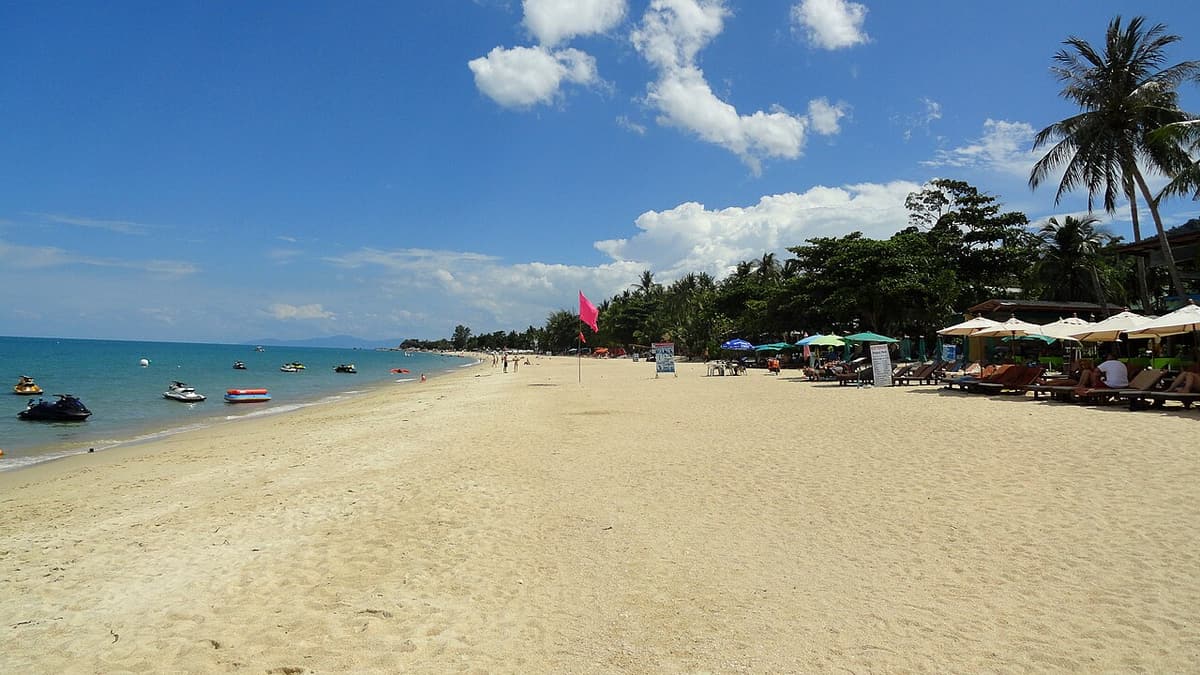
 Chaweng Beach
Samui’s longest, liveliest beach
Several kilometres of pale sand on the east coast, backed by the island’s biggest concentration of hotels, restaurants, shops and nightlife. Chaweng is busy and commercial, but the beach itself is beautiful and everything is within walking distance.
 Beaches & villages
 Lamai Beach
The relaxed second beach, with deeper water
Samui’s second resort beach is a wide curve of sand south of Chaweng with a calmer, more low-key town behind it. The water gets deep quickly, which makes for good swimming, and the Hin Ta & Hin Yai rocks sit at its southern end.
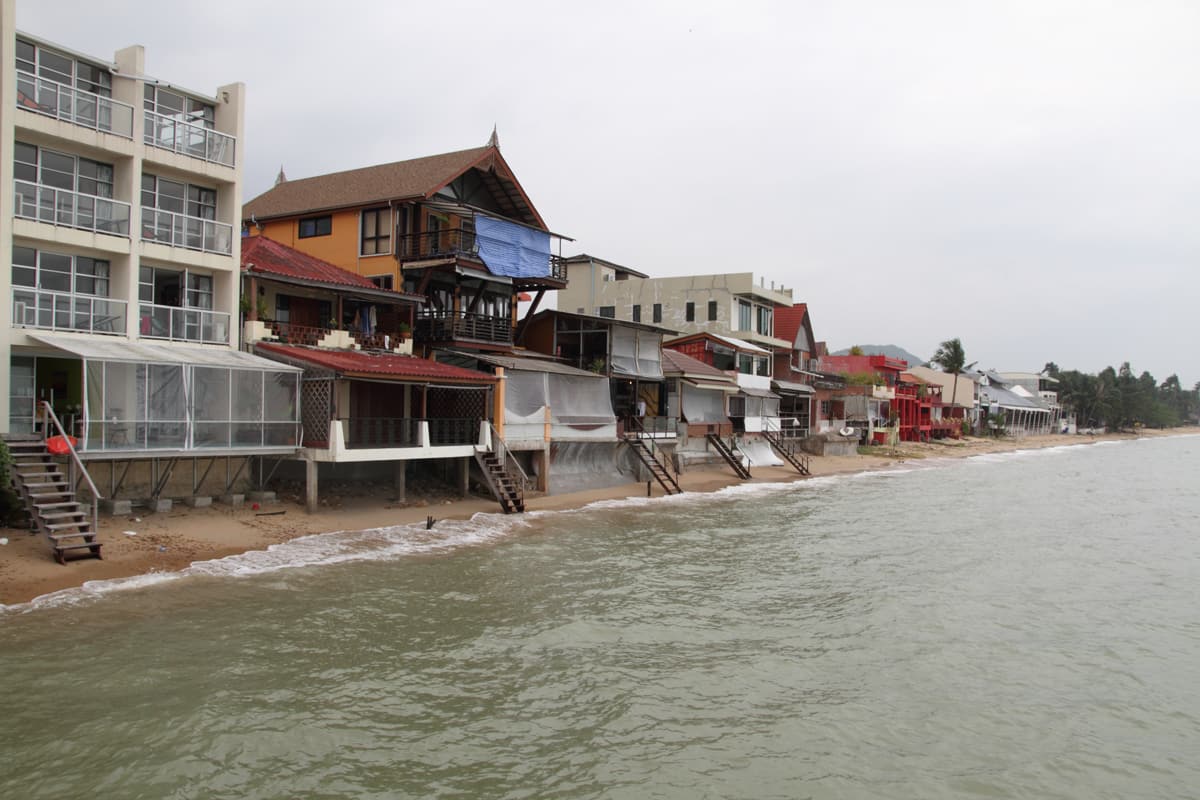 Beaches & villages
 Fisherman’s Village, Bophut
Old wooden shophouses and the Friday walking street
A single beachfront lane of old Chinese-Thai wooden shophouses in Bophut, now filled with restaurants, boutiques and small hotels. On Friday evenings it becomes the island’s best-known walking street market.
 Temples, rocks & waterfalls
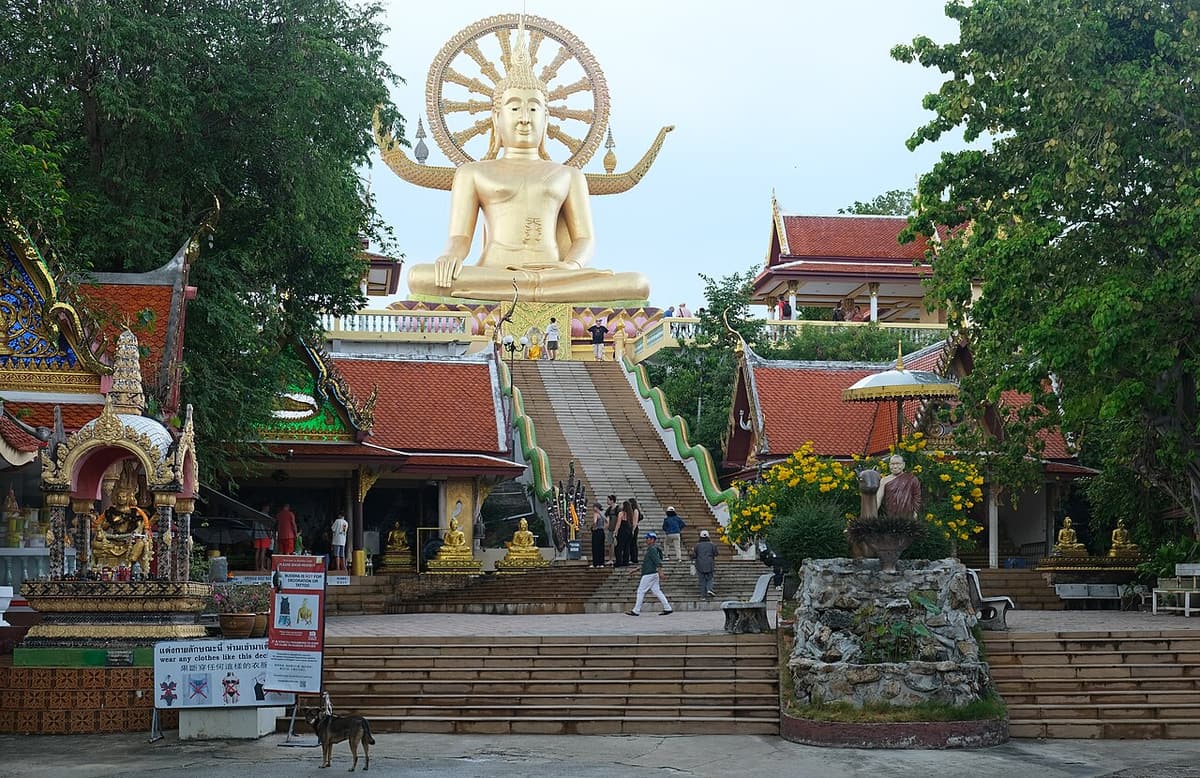
 Big Buddha (Wat Phra Yai)
The golden landmark of the north-east coast
A 12-metre gold-coloured seated Buddha on a small islet joined to Samui by a causeway. Built in 1972, it is the island’s best-known landmark and is visible from planes on the approach to the airport.
Scooters: licence, insurance and safety
Thailand has one of the world’s highest road-death rates, and on Samui motorbike crashes are the most common cause of serious injury to tourists. Hills are steep, sand and oil collect on corners, sudden rain makes the surface treacherous and drink-driving is common at night. Before you rent:
- You need a motorcycle licence. To ride legally you must hold a licence for motorcycles from your home country together with an International Driving Permit that covers that category (or a Thai motorcycle licence). A car licence is not enough. Police checkpoints issue on-the-spot fines.
- Your insurance probably depends on it. Most travel insurance policies will not cover medical bills from a motorbike accident if you were not properly licensed, were not wearing a helmet or had been drinking. Private hospital bills on Samui can be very large. Read your policy.
- Always wear a helmet — it is the law for rider and passenger — and wear closed shoes.
- Never leave your passport as a deposit. Offer a photocopy and a cash deposit instead, and photograph every scratch on the bike before you ride away, to avoid damage disputes.
- Rental insurance is minimal. The compulsory cover on rental bikes typically pays little for injuries and nothing for damage to the bike.
- Stay off the steep interior roads — particularly the routes to the Secret Buddha Garden and the hill viewpoints. Take a 4WD tour instead.
If you are not an experienced, licensed rider, do not learn here. Songthaews, apps and the odd taxi will cost less than one hospital visit.
Elephants: choosing an ethical sanctuary
Samui has no wild elephants; every elephant on the island was brought here for tourism, originally for trekking rides. In recent years several observation-based sanctuaries have opened that take in animals retired from logging and riding camps. Look for places where there is no riding, no shows and no tricks, where the elephants are not chained during the day, where group sizes are limited, and where contact is restricted to feeding from a distance or simply watching. Many welfare organisations now also advise against bathing with elephants. Avoid camps that advertise rides or performances, however they are labelled. Our tour ranking notes which options we prefer.
Food and cooking classes
Samui’s cooking is southern Thai with a strong coconut accent: curries enriched with fresh coconut milk, grilled seafood, sour-spicy soups and the local toffee, kalamae. The best-value meals are at the night markets — Fisherman’s Village on Fridays, Lamai on Sundays and smaller ones around the island on other evenings — and at simple roadside restaurants away from the beach roads. A half-day Thai cooking class, often starting with a market visit, is one of the most popular activities on the island and an ideal plan for a wet day.
Muay Thai
Chaweng’s stadiums stage fight nights several times a week, with a mix of Thai and foreign fighters, and tickets are easy to book ahead. If you would rather train than watch, Samui has numerous gyms — especially around Lamai and Chaweng — offering drop-in sessions for beginners as well as longer training camps.
Spas and wellness
Massage is everywhere, from simple beach salas where an hour of Thai massage costs a few hundred baht to elaborate hotel spas. Samui is also one of Asia’s main centres for wellness retreats — detox, fasting, yoga and fitness programmes — concentrated around Lamai and the south. Few of these are sold through tour platforms; book directly, and for anything medical or involving fasting, check the credentials of the staff.
Nightlife
Most of it is in Chaweng: beach clubs, cabaret shows, live music and late clubs around Soi Green Mango. Lamai has a smaller bar scene; Bophut is for cocktails and dinner rather than dancing. Once a month, many visitors cross to Koh Phangan for the Full Moon Party. Wherever you go, watch your drink, be wary of very cheap buckets of spirits, and take a taxi home.
Money and costs
- The currency is the Thai baht (THB). ATMs are everywhere but charge foreign cards a fee per withdrawal (around 220–250 baht), so take out larger amounts less often and decline the machine’s own currency conversion.
- Cards are accepted in hotels, malls and larger restaurants; markets, songthaews and small shops are cash only.
- Samui is more expensive than most of Thailand, particularly for transport and alcohol. Street food remains cheap.
- Tipping is not obligatory; rounding up or leaving 20–50 baht for good service is appreciated.
Health and safety
- Hospitals: Samui has several private international-standard hospitals, mainly around Chaweng and Bophut, as well as a government hospital in Nathon. Private care is good and expensive — travel insurance is essential.
- Jellyfish: box jellyfish occur in the Gulf of Thailand, including around Samui and Koh Phangan, and stings, though rare, can be very serious. The risk is thought to be higher in the rainy months and in calm, shallow water after rain. Many beaches have vinegar stations: if someone is stung, flood the area with vinegar for at least 30 seconds, do not rub it or rinse with fresh water, and get medical help immediately. Ask your hotel about current conditions, and consider a rash vest or stinger suit for children.
- The sea: waves and rip currents can be dangerous on the east coast during the rainy season. Respect red flags.
- Mosquitoes: dengue fever is present all year. Use repellent, especially at dawn and dusk.
- Sun and heat: the sun is strong even on cloudy days. Drink plenty of water and use high-factor sunscreen.
- Scams: the main ones are jet-ski and scooter “damage” claims. Photograph rentals before use and deal with established operators.
Temple etiquette
At the Big Buddha, Wat Plai Laem and Wat Khunaram, cover shoulders and knees, take off your shoes before entering halls, do not point your feet at Buddha images, and never climb on statues. Women should not touch monks. Beachwear belongs on the beach — cover up in shops and on the street.
What to pack
- Light clothing, plus something that covers shoulders and knees for temples.
- Reef-safe sunscreen, a hat and a rash vest for boat days.
- Shoes with grip for waterfalls and the Ang Thong viewpoint.
- Insect repellent and seasickness tablets.
- A light rain jacket and a dry bag from October to December.
- Your driving licence and International Driving Permit if you intend to drive.
Suggested itineraries
Three days: one beach day; a half-day loop of the temples and Hin Ta & Hin Yai with an evening in Fisherman’s Village; one day in Ang Thong.
One week: add a 4WD safari to the Na Muang waterfalls and the Secret Buddha Garden, a cooking class, and either Pig Island or Koh Tao.
Two weeks: split your stay — a week on Samui, three or four nights on Koh Phangan and three on Koh Tao, travelling one way by catamaran.